

On Tuesday, December 9, to mark the progress and challenges since the 2015 Paris Agreement and following the 30th United Nations Climate Change Conference of the Parties (COP30) in Belém, Brazil, the Embassy of France in the United States and the George Washington University Alliance for a Sustainable Future invite you to a timely conversation about international collaboration on climate action.
Join us at the Maison Française of the Embassy of France for a morning of roundtable discussions with policymakers, diplomats (including the Ambassador of France and a representative from Brazil), NGOs, the private sector, and climate experts.
RSVP for the conference using this link: Paris Climate Agreement 10 Years On: What’s Changed, What’s Next?, Tu, Dec 9, 2025 at 8:30 AM | Eventbrite
8:15 – COFFEE AND RECEPTION
9:00 – WELCOME ADDRESS AND EVENT FRAMING
- His Excellency Laurent Bili, Ambassador of France to the United States
- Her Excellency Maria Luiza Ribeiro Viotti, Ambassador of Brazil to the United States
- Ellen M. Granberg, President, The George Washington University
9:15 – KEYNOTE ADDRESS: Senator Sheldon Whitehouse (Rhode Island)
9:25 – CONTEXT, STAKES, AND SIGNIFICANCE OF PARIS
Laurence Tubiana, Chief Executive Officer, European Climate Foundation; Professor, Sciences Po, Paris ; French Ambassador for climate change negotiations at COP21 in Paris (2015)
9:35 – WHAT HAS CHANGED, PROGRESSED, & STALLED SINCE PARIS
Moderator: Frank Sesno, Executive Director, GW Alliance for a Sustainable Future
- Sue Biniaz, Former Principal Deputy Special Envoy for Climate; Senior Fellow and Lecturer at Yale University
- Ani Dasgupta, President and CEO, World Resources Institute
- Pierre Gentine, Professor of Earth and Environmental Sciences; LEAP Director, Columbia University
- Adelle Thomas,Vice-Chair of IPCC Working Group II, Senior Director, Climate Adaptation, Environmental Health, Natural Resources Defense Council
10:15 – KEYNOTE ADDRESS : Serena McIlwain, Secretary of the Environment, State of Maryland
10:30 – CLIMATE ACTION SINCE/BECAUSE OF PARIS
Moderator: Lauren Risi, Senior Fellow and Director of the Environmental Security Program, Stimson Center
- Charles Allen, DC Ward 6 Council Member; Chair, Transportation & Environment
- Rebecca Goodstein, Patagonia Activism and Grants Manager
- Casey Katims, Executive Director, US Climate Alliance
11:00 – VOICES FROM COP 30
- Robert Orttung, Director, Sustainability Research Institute and Paulo Cezar Braga, Head of the Science & Technology Office at the Embassy of Brazil in the United States
- Student Voices from COP
11:10 – PUBLIC OPINION: WHAT’S CHANGED, WHAT IT INFLUENCES
John Kotcher, Interim Director and Research Associate Professor, George Mason University’s Center for Climate Communication
11:20 – CLOSING REMARKS
11:30 – COFFEE, STUDENT POSTER SESSION AND NETWORKING
12:00 – END
Our Speakers
His Excellency Laurent Bili, Ambassador of France to the United States
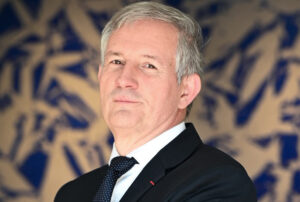
Mr. Laurent Bili is the Ambassador of France to the United States.
He was born on August 12, 1961.
A graduate of the French National School of Public Administration (ENA) (Victor Hugo Year, 1989-91), Laurent Bili joined the French Foreign Ministry’s Strategic Affairs and Disarmament Directorate (1991-93).
Seconded to the Defense Ministry as Deputy Diplomatic Adviser (1993-95), he then held several positions at the Quai d’Orsay:
- First Secretary and then Second Counsellor at the Embassy of France in Ankara (1995-99),
- First Secretary, Permanent Representative of France to the Western European Union (WEU) (1998-2000),
- Adviser to the European Union’s interim Political and Security Committee (PSC) in Brussels (2000-02),
- Head of Strategic Affairs (2002).
In 2002, he was Director of the Private Office of the Minister Delegate for European Affairs and became technical adviser at the Diplomatic Unit of the Presidency of the French Republic (2002-07).
He successively held the positions of Ambassador to Thailand (2007-09), Director of the Defense Minister’s Civilian and Military Office (2009-10), Ambassador to Turkey (2011-15) and then to Brazil (2015-17).
Laurent Bili was then Director-General for Global Affairs, Culture, Education and International Development at the French Ministry for Europe and Foreign Affairs and G7/G20 Sous-Sherpa (2017-2019).
Prior to his appointment in Washington, Laurent Bili was Ambassador to China since September 2019.
Her Excellency Maria Luiza Ribeiro Viotti, Ambassador of Brazil to the United States
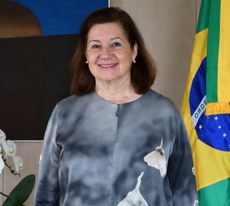
Ambassador Maria Luiza Ribeiro Viotti presented her credentials to President Joe Biden on June 30, 2023.
Before assuming her duties in Washington, Ambassador Viotti served as Chef de Cabinet to the Secretary-General of the United Nations (2017-2021), Under Secretary General for Asia and the Pacific at the Brazilian Ministry of Foreign Affairs (2016), and Ambassador of Brazil to Germany (2013-2016).
Ambassador Viotti served on multiple occasions at the Mission of Brazil to the United Nations in New York and as Permanent Representative to the UN from 2007 to 2013. During her tenure, she led the Brazilian Delegation to the UN Security Council (2010-2011) and presided over the Council in February 2011.
In addition to multilateral affairs, Ambassador Viotti worked in Brasilia and abroad in areas such as political affairs, trade and investment promotion, public diplomacy and regional cooperation. She served as counselor at the Embassy of Brazil in La Paz (1993-1996).
Ambassador Viotti holds a degree in Economics and joined the Brazilian foreign service in 1976, after graduating from the Rio Banco Institute (Brazil’s diplomatic academy).
Ambassador Viotti is married to Dr. Eduardo Baumgratz Viotti. The couple has a son.
Ellen M. Granberg, President, The George Washington University
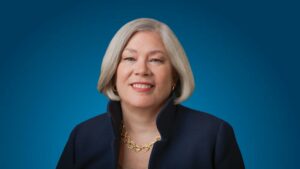
Ellen M. Granberg is the 19th President of the George Washington University, a preeminent research university and the largest institution of higher education in the nation’s capital.
President Granberg is an accomplished academic leader who has a record of strengthening teaching and research excellence across disciplines, supporting a diverse and inclusive community of students, faculty, and staff, and collaborating with all stakeholders to drive transformative change and increase institutional prominence. She became the first woman to serve as GW’s President on July 1, 2023.
Previously, President Granberg served as Provost and Senior Vice President for Academic Affairs at Rochester Institute of Technology (RIT) and was a professor and senior leader at Clemson University.
As RIT’s chief academic officer, President Granberg oversaw nine colleges, two degree-granting units, and international campuses in Croatia, Dubai, Kosovo, and China. In this role, she oversaw key initiatives, including increasing undergraduate student success, expanding doctoral education, improving facilities for instruction and research, and leveraging RIT’s strengths in innovation, creativity, and cross-disciplinary collaboration to advance the university’s academic mission.
At Clemson, Granberg was the Senior Associate Provost and Associate Provost for Faculty Affairs. She chaired the development and implementation of the institution’s strategic plan, which spurred growth in research, graduate studies, and inclusive excellence. In addition, Dr. Granberg developed a university-wide strategy for faculty recruitment, retention, compensation, and development.
A nationally recognized scholar in the sociology of self, identity, and mental health, President Granberg began her career in academia as a Professor of Sociology.
Prior to pursuing graduate studies, she spent eleven years in the telecommunications industry, leading large integrated software development teams that replaced aging billing and customer service systems.
President Granberg holds a B.A. in history from the University of California at Davis and an M.A. and Ph.D. in sociology from Vanderbilt University.
Senator Sheldon Whitehouse (Rhode Island)
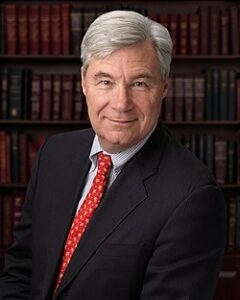
Sheldon Whitehouse represents Rhode Island in the U.S. Senate, where he champions policies to uphold American leadership in the world, protect our planet in a changing climate, and hold the powerful accountable.
Whitehouse is the Ranking Member of the Senate Environment and Public Works (EPW) Committee and Co-Chair of the Caucus on International Narcotics Control, and also serves as a senior member of the Judiciary Committee, the Budget Committee, and the Finance Committee. Whitehouse serves as Ranking Member of the Helsinki Commission, formally known as the Commission on Security and Cooperation in Europe.
A graduate of Yale University and the University of Virginia School of Law, Sheldon served as Rhode Island’s U.S. Attorney and state attorney general before being elected to the Senate in 2006. He and his wife Sandra, a marine biologist and environmental advocate, live in Newport. They have two grown children.
EARLY LIFE
Born on October 20, 1955, Sheldon Whitehouse grew up in a Foreign Service family. Throughout his childhood, Whitehouse lived in Vietnam, Cambodia, South Africa, Congo, Guinea, Laos, and Thailand. While abroad with his family, Sheldon learned firsthand the example American democracy sets for the world and the value of public service.
Whitehouse graduated from Yale University with a degree in Architecture and later received his J.D. from the University of Virginia School of Law.
A CAREER OF SERVICE
After graduating from law school, Whitehouse worked as a clerk for the Supreme Court of West Virginia. He spent six years working as a lawyer in the Rhode Island Attorney General’s Office before taking on a number of high-ranking positions in the Governor’s Office under Governor Bruce Sundlun. In 1994, President Bill Clinton appointed Whitehouse as US Attorney for Rhode Island. Then, Whitehouse was elected by the people of Rhode Island to serve as the state’s Attorney General from 1999 to 2003.
SENATE CAREER
Whitehouse has represented Rhode Island in the United States Senate since 2007. In the Senate, Sheldon Whitehouse has earned a reputation as a fierce advocate for progressive values and a thoughtful legislator capable of reaching across the aisle to achieve bipartisan solutions. He has been at the center of bipartisan efforts to pass laws overhauling federal education policy, rebuilding our nation’s infrastructure, reforming the criminal and juvenile justice systems, protecting Americans from toxic chemicals in everyday products, and addressing ocean plastic waste.
Recognizing the devastating toll of addiction in Rhode Island and across the nation, Whitehouse authored the first significant bipartisan law to address the opioid crisis, the Comprehensive Addiction and Recovery Act.
Representing the Ocean State, Whitehouse plays a key role in crafting policies addressing climate change, environmental protection, and a price on carbon. He passed into law a dedicated fund to support ocean and coastal research and restoration and bipartisan legislation to confront the crisis of marine plastic and other waste polluting our oceans. He has worked to enact bipartisan measures to reduce carbon pollution and boost America’s clean energy economy.
Whitehouse has stood as a staunch defender of Social Security and Medicare, and has made improving care and reducing costs in our health care system a hallmark of his career. To counteract the corrosive effects of special interests in our democracy, Whitehouse has championed efforts to root out dark money from our elections and make Congress and the courts accountable to the American people.
Laurence Tubiana, Chief Executive Officer, European Climate Foundation; Professor, Sciences Po, Paris
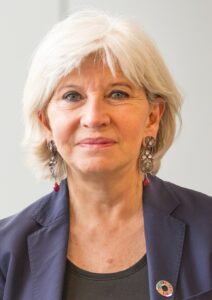
Laurence Tubiana is CEO of the European Climate Foundation (ECF) and a professor at Sciences Po, Paris. She previously chaired the Board of Governors at the French Development Agency (AFD), as well as the Board at Expertise France (the French public agency for international technical assistance). Before joining the ECF, Laurence was France’s Climate Change Ambassador and Special Representative for COP21, and as such a key architect of the landmark Paris Agreement. Following COP21 and through COP22, she was appointed UN High-Level Champion for climate action.
Laurence brings decades of expertise and experience in climate change, energy, agriculture and sustainable development, working across government, think tanks, NGOs and academia. She started her career as a Research Director for the French National Institute for Agricultural Research (INRA). In the 80’s and early 90’s she founded and then led Solagral, an NGO working on food security and the global environment. She founded in 2002 and directed until 2014 the Paris-based Institute of Sustainable Development and International Relations (IDDRI). From 1997 to 2002, she served as Senior Adviser on the Environment to the French Prime Minister Lionel Jospin. From 2009 to 2010, she created and then led the newly established Directorate for Global Public Goods at the French Ministry of Foreign Affairs (MAE). In 2013, she chaired the French National Debate on the Energy Transition. In 2018, President Macron appointed her to France’s High Council on Climate Change.
Throughout the years, Laurence has held several academic positions, including as a Professor and Scientific Director for the International Development and Environmental Studies Master degrees at Sciences Po, Paris; and Professor of International Affairs at Columbia University, New York. She has been a member of numerous boards and scientific committees, including the Chinese Committee on the Environment and International Development (CCICED), and currently sits on advisory boards such as Iberdrola.
Frank Sesno, Executive Director, GW Alliance for a Sustainable Future
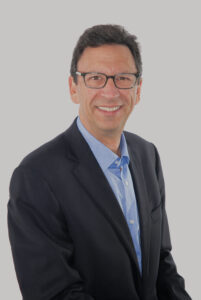
Frank Sesno serves as the Executive Director of the George Washington University Alliance for a Sustainable Future and Director of Strategic Initiatives and Professor at the School of Media and Public Affairs. The Alliance for a Sustainable Future is a broad pan-university initiative to
amplify the university’s teaching, research, convening and impact relating to global challenges around climate change, environmental justice, and sustainability.
An Emmy-award winning journalist, Sesno’s journalism career spanning four decades has put him at the reporting forefront of major events including presidential campaigns and debates, superpower summits, and conflicts worldwide. He served as director of the School of Media and Public Affairs from 2009-2020, currently teaches environmental reporting, and founded Planet Forward, a platform for college students worldwide to research and publish stories about climate change, sustainability, and innovation.
Sesno’s diverse journalistic career includes more than two decades at CNN as a White House correspondent, anchor, Sunday talk show host, Washington Bureau Chief, and Special Correspondent. Author of « Ask More: The Power of Questions to Open Doors, Uncover Solutions, and Spark Change, » Sesno shares his expertise and love of interviewing through his course, The Art of the Interview.
Sesno currently serves as a member of the Poynter Institute’s National Advisory Board. He holds membership in the Council on Foreign Relations and serves as an emeritus trustee of his alma mater, Middlebury College, where he earned a Bachelor of Arts degree in American History. In recognition of his contributions to journalism and civil discourse, he has been awarded three honorary degrees and, in 2023, the President’s Medal at the George Washington University.
Sue Biniaz, Former Principal Deputy Special Envoy for Climate; Senior Fellow and Lecturer at Yale University
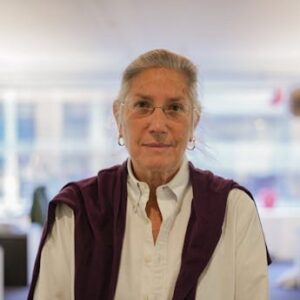
For more than 25 years, Sue Biniaz served as the lead climate lawyer for the U.S. State Department. In that capacity, she played a central role in all major international climate negotiations, including the Paris Agreement on climate change. During her tenure at the State Department, as a Deputy Legal Adviser, she also supervised the Treaty Office and issues related to the law of the sea, Somali piracy, the Western Hemisphere, human rights, law enforcement, and private international law. Prior to that, she led the State Department’s legal office for Oceans, Environment, and Science, as well as the legal office for European Affairs. She clerked for Judge Dorothy W. Nelson on the 9th U.S. Circuit Court of Appeals, attended Yale College, and earned her J.D. from Columbia Law School. Since leaving the State Department, Sue has been teaching courses on international environmental law and the international climate negotiations at various law schools, including Yale, Columbia, and the University of Chicago.
Ani Dasgupta, President and CEO, World Resources Institute
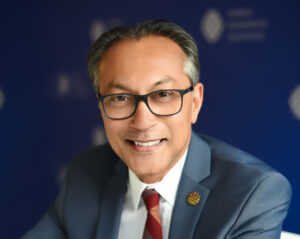
Ani Dasgupta is President & CEO of World Resources Institute and author of The New Global Possible. where he spearheads global efforts to drive systemic change across climate, nature, and human development. Dasgupta is a widely recognized leader in climate policy and finance, sustainable cities, and poverty alleviation.
At WRI, he spearheads global efforts to drive systemic change across climate, nature, and human development. Ani’s visionary leadership is defined by action to transform economies, cities, and communities for a prosperous and inclusive future. Dasgupta is a widely recognized leader in climate policy and finance, sustainable cities, and poverty alleviation. He brings a global perspective to ensure that environmental solutions are both scalable and equitable. His work has been featured in the Financial Times, New York Times, TIME Magazine and more. He took the helm at WRI in 2021 after seven years as Global Director of WRI Ross Center for Sustainable Cities. Prior to joining WRI, Dasgupta spent two decades at the World Bank.
Pierre Gentine, Professor of Earth and Environmental Sciences; LEAP Director, Columbia University
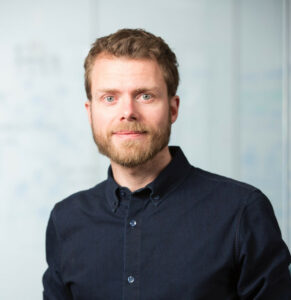
Pierre Gentine is the Maurice Ewing and J. Lamar Worzel professor of geophysics in the departments of Earth and Environmental Engineering and Earth and Environmental Sciences at Columbia University. He studies the terrestrial water and carbon cycles and their changes with climate change. Pierre Gentine is the recipient of the National Science Foundation (NSF), NASA and Department of energy (DOE) early career awards, as well as the American Geophysical Union Global Environmental Changes Early Career, Macelwane medal and American Meteorological Society Meisinger award. He is the director of the NSF Science and Technology Center (STC) for Learning the Earth with Artificial intelligence and Physics (LEAP), the largest funding mechanism of the NSF.
Adelle Thomas,Vice-Chair of IPCC Working Group II, Senior Director
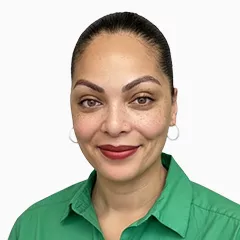
Adelle Thomas leads NRDC’s adaptation and resilience work, supercharging the growth of our excellent, longstanding domestic work and our burgeoning global efforts in these areas. Thomas brings more than 17 years of expertise in scientific research, policy development, and advocacy around climate adaptation, along with an extensive background in engaging with communities to identify climate-related risks and articulate adaptation needs. This includes serving as a scientific advisor in negotiations at the United Nations Framework Convention on Climate Change, working as a lead author for several Intergovernmental Panel on Climate Change (IPCC) reports, collaborating with developing nations to craft and implement National Adaptation Plans, providing training on adaptation, and helping formulate New York State’s inaugural adaptation plan. Thomas currently serves as vice chair for the IPCC Working Group II for its seventh assessment cycle. Thomas holds bachelor’s degrees from Macalester College and the University of Minnesota and a master’s degree in geography and a PhD from Rutgers University. She is based in NRDC’s Washington D.C., office.
Serena McIlwain, Secretary of the Environment, State of Maryland
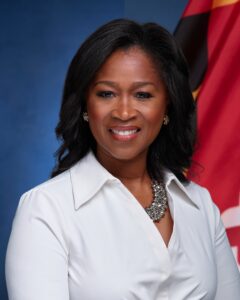
Serena McIlwain serves as the 11th Secretary of the Maryland Department of the Environment. She previously was Under Secretary of California’s Environmental Protection Agency and held senior executive roles in multiple federal agencies, including the U.S. EPA. A Washington, D.C. native, McIlwain has led efforts in climate action, environmental justice, and Chesapeake Bay protection. Her leadership focuses on sustainability, equity, and organizational excellence to strengthen Maryland’s environmental policies and programs.
Lauren Risi, Senior Fellow and Director of the Environmental Security Program, Stimson Center

Lauren Risi directs the Environmental Security Program at the Stimson Center. She brings deep expertise in translating complex environmental security risks into actionable insights for policymakers, with a track record of building cross-sectoral partnerships to advance environmental resilience and peace. She previously led the Environmental Change and Security Program at the Wilson Center, where she spent nearly two decades convening policymakers, practitioners, researchers, and industry on strategies to build resilience and stability in a warming world. Lauren is a widely respected voice on climate security and serves as Vice President of the Environmental Peacebuilding Association. She is also the managing editor of New Security Beat, a long-running blog that explores emerging threats and innovative responses at the nexus of environment, population, health, and security.
She holds an MA from the University for Peace in Costa Rica, and a BA from the University of California, Los Angeles.
Charles Allen, DC Ward 6 Council Member; Chair, Transportation & Environment
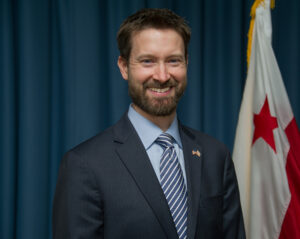
Charles Allen is focused on building a Ward 6 with great schools at every level and a neighborhood you can always call home.
In his first three terms on the DC Council, Ward 6 Councilmember Charles Allen has successfully championed bold legislative efforts around education, the environment, safer streets, strengthening Metro, public safety and criminal justice, campaign finance and elections reform, LGBTQ rights, and women’s health. His first piece of legislation, “Books from Birth”, has delivered more than 3 million books to the homes of DC families with a child under the age of five, at no cost to the families, with targeted enrollment of children in communities with lower literacy rates. It remains one of the most popular government-run programs in the District.
As Ward 6 Councilmember, he has focused on ensuring every student has a great neighborhood school, improving public safety, supporting small businesses, and creating more affordable housing – and in recent years, Ward 6 has created more new affordable housing than any other Ward, with many more homes in the pipeline. He has brought community members together to lead transformations of beloved public spaces, including Eastern Market Metro Park, the Southwest Library, the Southeast Library, and Swampoodle Park and Terrace, as well as nearly all of Ward 6’s public schools and play spaces. His “Vision Zero” and “STEER Act” legislation have pushed the District to move quickly to create safer streets for all. And the Council recently passed his landmark “Metro for DC” legislation to make bus service fare-free in the District and give DC residents a $100 balance on their SmarTrip cards.
As Chair of the Committee on the Judiciary and Public Safety for three Council Periods, Councilmember Allen led the Council in passing comprehensive policing reform and crime victims’ rights legislation, overhauling the city’s crime lab, banning ghost guns, creating the District’s “red flag” gun safety law, passing landmark second chances sentencing and workforce development laws, and expanding access to justice in the courts. Through the budget process, he created the District’s first-ever Gun Violence Prevention Director and exponentially increased funding each year for critical violence prevention and reduction programs and crime victims’ and reentry grants. Also passionate about elections and campaign finance reform, Councilmember Allen has passed legislation to make vote-by-mail permanent, create the District’s automatic voter registration system and “Fair Elections” public financing program, expand voting rights, and ban so-called government “pay-to-play” contracting.
In Council Period 26, he serves as the Chair of the Council’s Committee on Transportation and the Environment and sits on the Committees on Business and Economic Development, Health, and Judiciary and Public Safety. Having served as the Chair of the Metropolitan Washington Council of Governments last year, he is now the Vice Chair. In Council Period 24, Councilmember Allen also served as co-chair of the Council’s Special Committee on COVID-19 Pandemic Recovery, tasked with producing recommendations to equitably shape the District’s recovery.
Councilmember Allen graduated from Washington and Lee University and holds a Master of Public Health from the University of Alabama at Birmingham. He lives in Northeast DC with his wife, Jordi, and their two children.
Rebecca Goodstein, Patagonia Activism and Grants Manager

Rebecca Goodstein manages employee activism and philanthropic giving within Patagonia’s retail communities. A longtime advocate for environmental causes and civic engagement, she enjoys volunteering at the polls and helping maintain local trails and green spaces. Before joining Patagonia in 2014, Rebecca fundraised for global conservation projects at The Nature Conservancy and wrote grants for the Student Conservation Association. She lives in Washington, DC with her husband and their two perfect cats, Ruth and Sonia.
Casey Katims, Executive Director, US Climate Alliance
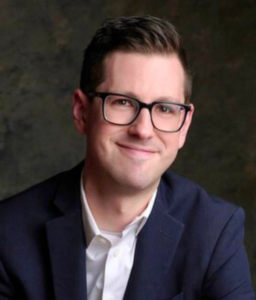
Casey Katims is the Executive Director of the U.S. Climate Alliance. Most recently, he served as Deputy Associate Administrator for Intergovernmental Relations at the U.S. Environmental Protection Agency (EPA) — a key member of the EPA leadership team — and directed the agency’s work with state and local governments. In this role, he built coalitions across government to advance the Biden-Harris Administration’s environmental priorities and forged partnerships with governors and mayors to protect vulnerable communities from pollution. Prior to his work with EPA, Katims was Director of Federal and Inter-State Affairs for Washington Governor Jay Inslee, serving as the governor’s primary advisor on federal policy issues and directing the state of Washington’s engagement with Congress, the White House, federal agencies, and fellow governors’ offices. Katims previously spent five years as a policy advisor in the U.S. House of Representatives for Rep. Suzan DelBene, developing bills and amendments on a range of issues and helping manage the member’s responsibilities on the House Ways and Means Committee. Katims graduated from Vassar College and grew up in Edmonds, Washington.
Robert Orttung, Director, Sustainability Research Institute
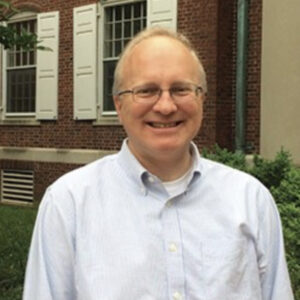
Dr. Robert Orttung is Professor of Sustainability and International Affairs and Director of the Sustainability Research Institute at the George Washington University. Orttung is the lead PI for several National Science Foundation projects, including Measuring Urban Sustainability in Transition and Arctic Cruise Ship Tourism. Additional interests include energy transitions, critical mineral mining, and data centers. He has published extensively on Arctic topics and issues related to the development of Russia’s political systems. Orttung received a B.A. in Russian Studies from Stanford University and both a M.A. and Ph.D. in Political Science from the University of California, Los Angeles.
Paulo Cezar Braga, Head of the Science & Technology Office at the Embassy of Brazil in the United States
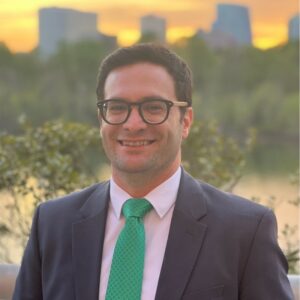
Brazilian Diplomat since 2008, presently serving as Head of the Science, Technology, and Health Sectors at the Embassy of Brazil, Washington D.C.
Bachelor of Arts in History (University of São Paulo), currently pursuing a Ph.D. in Sustainability (University of São Paulo).
John Kotcher, Interim Director and Research Associate Professor, George Mason University’s Center for Climate Communication
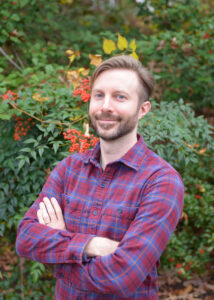
John Kotcher, Ph.D. is a Research Associate Professor and Interim Director of the Center for Climate Change Communication at George Mason University. He leads a dynamic team of faculty, post-doctoral fellows, and graduate students dedicated to exploring effective strategies for communicating about climate change and air pollution. Together, their work empowers organizations to engage and activate citizens in shaping our society’s response to these important issues.
Dr. Kotcher is also a co-PI on the Climate Change in the American Mind project, a series of national public opinion surveys carried out in partnership with the Yale Program on Climate Change Communication to investigate and track public attitudes toward climate change and support for climate policies in the United States.
Dr. Kotcher has authored more than 60 peer-reviewed articles on climate change communication. His research has appeared in journals such as The Lancet Planetary Health, The BMJ (British Medical Journal), Nature Climate Change, and Environmental Communication. His research has also been featured in leading news outlets, including The New York Times, The Washington Post, The Los Angeles Times, and The Atlantic.